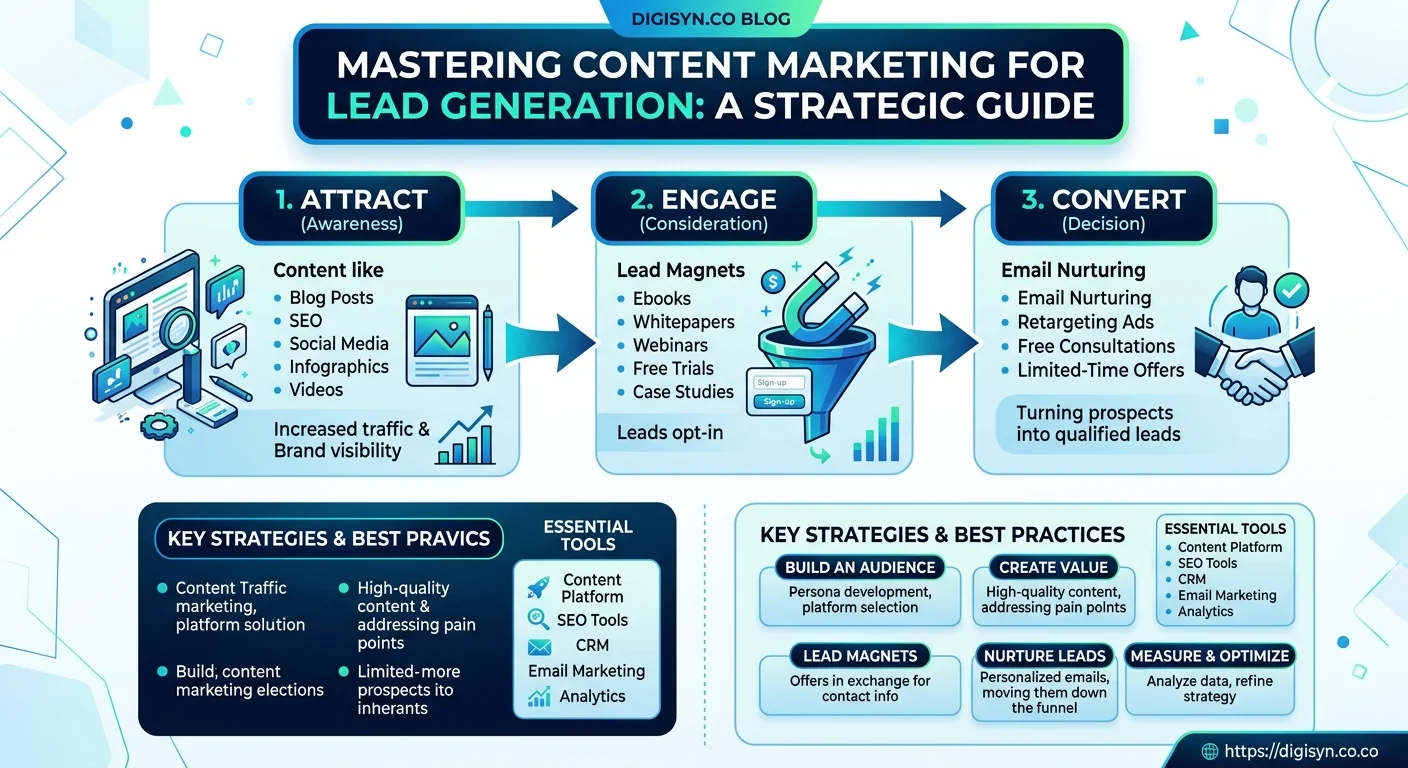
A content marketing lead is someone who found your business through something you published — a blog post, a service page, a how-to guide — and then took the next step to get in touch or sign up. For small businesses, this is one of the most valuable types of leads you can generate, because the person already knows what you do and already trusts you enough to reach out. This article explains exactly how to start generating more of them.
Why Content Marketing Leads Are Different from Other Leads
When someone calls you after seeing a paid ad, they know you paid to be in front of them. When someone calls you after reading an article you wrote that answered a question they had been sitting with for weeks, the dynamic is completely different. They came to you. They read your thinking. They trust your expertise before the conversation even starts.
Content marketing leads tend to convert at higher rates, require less selling, and are more likely to refer others. The trade-off is that building the content to attract them takes time. But once it is working, it keeps working — unlike ads, which stop the moment you stop paying.
Step 1: Understand What Your Customers Are Searching For
The foundation of any content marketing lead generation strategy is keyword research. This does not have to be complicated. Start by listing every question a customer has ever asked you before hiring you. Then search for those questions in Google and look at what already ranks. Those pages are your competition, and understanding what they cover will tell you what you need to write.
Free tools like Google Search Console, Ubersuggest, and even Google's own autocomplete suggestions can show you exactly what people are typing in your industry. Focus on "commercial intent" keywords — searches that suggest someone is close to making a decision, such as "best [service] in [city]", "[service] for small business", or "how to choose a [provider]".
Step 2: Create Content That Answers Those Questions Properly
The most common content marketing mistake is writing shallow content. A 300-word blog post that skims the surface of a topic will not rank, and even if it does, it will not convert a visitor into a content marketing lead. Google has become very good at evaluating whether a page genuinely answers a user's question or just repeats keywords.
Good content marketing content for lead generation typically does the following:
- Answers the search question clearly in the first paragraph
- Goes into enough depth that the reader does not need to go back to Google
- Includes practical examples or steps the reader can act on
- Addresses related questions the reader probably has
- Ends with a clear and relevant call to action
The goal is not to write the longest article on the internet. It is to write the most useful one for your specific customer.
Step 3: Optimise Every Page for the Right Search Terms
Writing great content is only half the job. To generate content marketing leads through organic search, your pages need to be properly optimised. That means including the primary keyword in your page title, your H1 heading, and naturally throughout the body text. It also means writing a meta description that gives searchers a reason to click, using internal links to connect related pages on your site, and making sure your page loads quickly on mobile.
None of this needs to be technically complex. A well-structured, clearly written page that covers its topic thoroughly and loads fast will outperform a technically perfect page with thin content almost every time.
Step 4: Turn Readers Into Leads With a Clear Next Step
Traffic without conversion is just vanity. Every piece of content on your site should have a logical next step for the reader. For most small businesses, that is either a contact form, a phone number, or a free offer (like an audit, a quote, or a downloadable resource) that gets the reader into your funnel.
The call to action needs to be relevant to what the person just read. If someone just finished reading your article about choosing a content management partner, the most logical next step is "talk to a content management specialist" — not a generic "subscribe to our newsletter." Match the offer to the content and your conversion rate will improve significantly.
Step 5: Maintain and Update Your Content Over Time
One of the biggest missed opportunities in content marketing lead generation is neglecting content after it has been published. A blog post that ranked on page one two years ago may have slipped to page three because competitors updated their articles and Google recalibrated. Regular content audits — reviewing which pages are declining in traffic or rankings — allow you to refresh those pages before they drop completely.
Updating old content is often faster than writing new content, and Google tends to respond quickly when it sees a page being actively maintained. This is why content management is not a "set and forget" activity — it is an ongoing investment that compounds the longer you do it.
What Does a Content Marketing Lead Actually Look Like?
A content marketing lead might be someone who Googled "website content management for small business", found your blog, read three articles, and then clicked "Get Your Free Audit." It might be someone who saved your article on local SEO six months ago and finally reached out when they were ready to act. It might be a referral from someone who read your content and forwarded it to a friend who needed your services.
The common thread is that the content did the trust-building before the conversation started. For small businesses without large sales teams or big ad budgets, that is an incredibly powerful advantage.
Start Generating More Content Marketing Leads
We build and manage the content that brings qualified leads to your website. Request a free audit to see your current opportunities.
Get Your Free Audit →